
Welcome to the twenty-eighth edition of FOI Clinical. Each week, we'll send you a briefing on outbreak news. When something urgent breaks, you'll get an alert the same day.
In This Issue
Measles - Cyclosporiasis and other foodborne illnesses - Covid-19 - West Nile virus - Powassan in Northern states - Dengue in Southern states - Ebola in the Democratic Republic of Congo
National interest
Measles
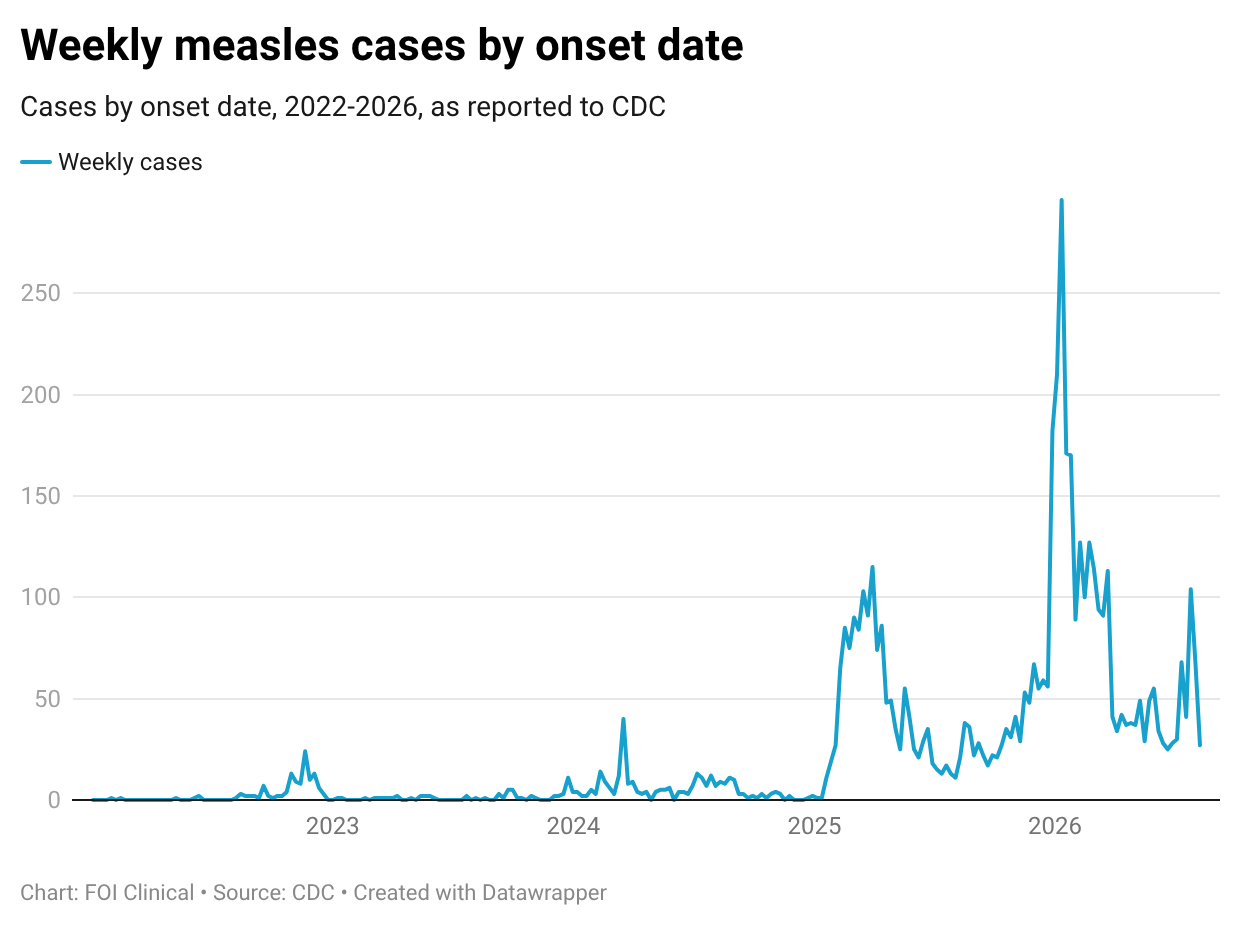
Measles continues to exceed recent records with 2,566 confirmed cases so far this year, exceeding last year’s total of 2,289. States with currently active clusters include Pennsylvania (55 reported to the National Notifiable Disease Surveillance System last week), Ohio (20), and Maryland (8). The last two years have been marked by large and protracted outbreaks that eventually been controlled through intensive response efforts. This pattern will likely continue until vaccine coverage rises to the roughly 95% required for herd immunity.
That scenario seems unlikely in the near term. Earlier this month, President Trump signed an executive order recommending that the MMR vaccine be split into three separate products, each to be given at a different visit. No such products are available in the United States, and there are no concrete plans to bring any to market. Nonetheless, the executive order and related measures will likely undermine vaccine confidence and contribute to the years-long pattern of falling coverage. The executive order also proposed limiting immunization recommendations to a smaller set than is currently recommended by CDC. However, professional medical societies recommend maintaining the current vaccination schedule, and it is state and local jurisdictions, not the federal government, that determine school entry requirements.
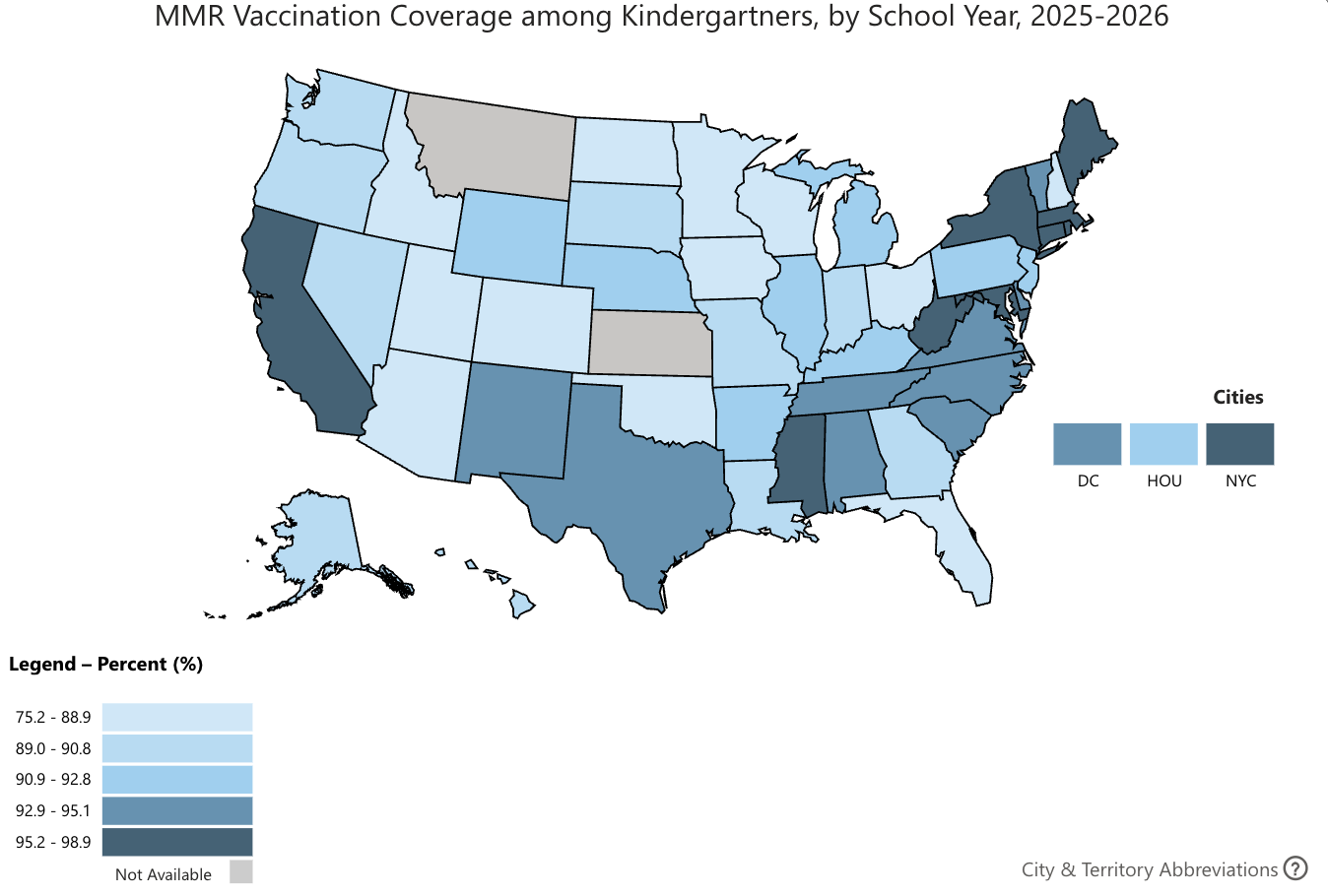
According to data recently released by CDC, 92.4% of kindergartners have received two doses against measles, mumps, and rubella. This figure is down from a 2019-2020 high of 95.2%. In some states, such as Idaho, coverage has fallen dramatically, dropping from 90% to 75% in the last decade. Falling coverage is largely attributable to an increase in non-medical exemptions, which many state legislatures have moved to loosen in recent years.
Cyclosporiasis and other foodborne illnesses
Although a month has passed since Taylor Farms recalled shredded and iceberg lettuce, the number of cyclosporiasis cases continues to rise. According to CDC data, 15,716 cases have been reported since May 1. An additional 11,841 suspected cases are under investigation. A typical year sees 3,000 to 4,000 cases reported, making this year by far the largest year on record.
Nearly every state has reported cases over the last two months. The geographic spread points to additional exposure sources. However, to date, no additional sources have been identified and investigations are ongoing by state and local health departments. According to the Food and Drug Administration, at least six clusters of unknown source have been reported since early July, including one with over 200 associated cases. The unusual number of clusters may be in part due to improved ascertainment; widespread awareness about the iceberg-linked outbreak may have increased testing that in turn revealed outbreaks that would have otherwise gone undetected.